Operation Endgame Disrupts Gootloader, CastleRAT and StealC Networks

Operation Endgame Disrupts Gootloader, CastleRAT and StealC Networks
An international law-enforcement and private-sector operation has dismantled infrastructure behind three malware services that helped turn stolen access into ransomware, fraud and follow-on intrusions.
Europol said partners seized 235 servers and 257 domains during the November 2026 action against Gootloader, CastleRAT and StealC. Investigators also recovered more than 6.4 million stolen login credentials and are sharing victim data with notification and remediation partners.
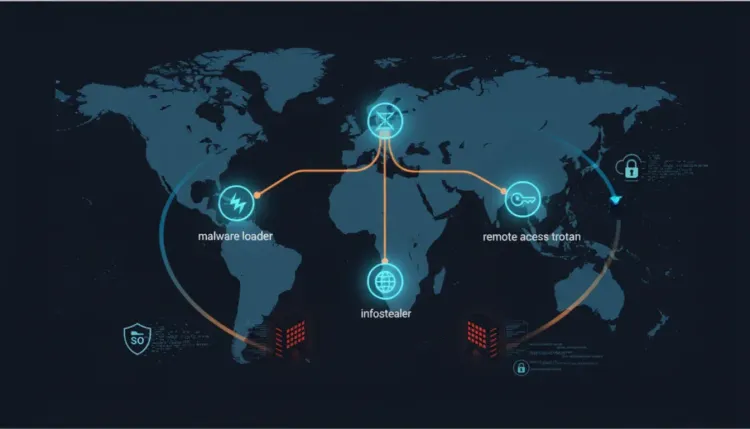
The headline numbers matter, but the operational lesson is more useful: these were not isolated malware families. They were interchangeable services in an attack supply chain, where one tool delivered access, another enabled remote control or credential theft, and downstream criminals monetised the result.
Three services, three links in the attack chain
Gootloader was distributed through compromised websites, including WordPress sites manipulated to surface malicious pages in search results. Victims were lured into downloading fake legal documents. The resulting access was then sold or used to deploy ransomware. The U.S. Department of Justice said Gootloader infected at least 25,000 computers globally since 2018 and was linked to ransomware attacks against at least 44 U.S. victims, with approximately $28.8 million in losses.
CastleRAT provided remote control of infected computers. According to the Dutch police and Shadowserver, the operation seized 120 servers and 39 domains associated with the RAT. A remote-access trojan is especially valuable to criminals because it can provide a flexible foothold for credential theft, lateral movement and encryption of victim systems.
StealC focused on information theft. Its operators collected passwords, stored access data and digital identities for later sale and abuse. That can include corporate VPN credentials, single sign-on tokens and session cookies, allowing criminals to bypass some protections even after the original malware is removed.
Together, the services illustrate how cybercrime-as-a-service reduces the skills needed to launch an intrusion. An operator does not need to build every component: access, remote control, credential theft and ransomware deployment can be bought or outsourced as separate capabilities.
Why the takedown is more than a server count
The operation removed infrastructure, but it also created a victim-notification opportunity. Europol and participating partners are making stolen data available through services including Have I Been Pwned, Shadowserver, DIVD, CheckjeHack, Sekoia, NoMoreLeaks and the Dutch National Cyber Security Centre.
This is an important distinction in incident response. Disrupting command-and-control servers can reduce an attacker’s reach, but it does not automatically revoke credentials already copied from victims. The defensive work continues at the identity layer: identify exposed accounts, revoke active sessions, rotate passwords and tokens, and investigate where those identities were used.
The stolen-data notification process also shows why defenders should preserve useful telemetry. Authentication logs, VPN access records, identity-provider events, endpoint detections and browser-session data can help connect a credential exposure to later activity. A password reset without that investigation may close one door while leaving an attacker’s second session or newly created access path in place.
What security teams should do now
1. Check notification channels
Monitor messages from national CSIRTs, Shadowserver, Have I Been Pwned and the other partners named in the operation. Treat a notification as an incident lead, not as proof that the only affected account is the one listed.
2. Revoke sessions before rotating credentials
Invalidate active sessions, refresh tokens, API keys and remembered browser sessions for affected identities. Then rotate passwords and secrets from a clean administrative path. Prioritise privileged accounts, VPN users, cloud administrators, service accounts and accounts with access to financial systems.
3. Hunt for identity abuse
Review sign-ins from unusual locations, impossible-travel patterns, new devices, unfamiliar user agents, suspicious MFA changes, mailbox-rule creation, OAuth grants and new API keys. For cloud and SaaS identities, check whether an exposed account created persistence or accessed data after the suspected infection window.
4. Investigate endpoints and browsers
An infostealer infection can expose more than a password database. Review endpoints for malware persistence, suspicious archive or document execution, browser credential access, unusual outbound connections and unexpected remote-control tooling. Reimage high-risk systems when the integrity of the host cannot be established.
5. Harden the first link
Patch internet-facing CMS platforms, remove abandoned plugins, enforce phishing-resistant MFA for privileged users and restrict administrative access. Where possible, use password managers, short-lived tokens and conditional access policies that limit the value of a stolen session.
The broader lesson
Operation Endgame’s latest action is a disruption, not a declaration that the ecosystem has disappeared. Previous takedowns showed that criminal services can rebuild when demand, stolen credentials and hosting options remain available.
The durable defense is to break the chain at multiple points: prevent the initial malware execution, detect the infostealer or RAT, revoke the identities it touches, and make downstream access too narrow to support ransomware or fraud. When a notification arrives, the priority is not merely deleting a malicious file. It is proving which identities and sessions can still be trusted.
Sources
- Europol: 6.4 million victim datasets secured in international operation
- U.S. Department of Justice: Gootloader malware disrupted
- Shadowserver: CastleRAT historical bot infection report
- Dutch Police: International action disables cybercriminal network
References
FAQ
An international law-enforcement and private-sector operation has dismantled infrastructure behind three malware services that helped turn stolen access into ransomware, fraud and follow-on intrusions.