CVE-2026-41940 turns exposed cPanel and WHM servers into control-plane takeover targets

CVE-2026-41940 turns exposed cPanel and WHM servers into control-plane takeover targets
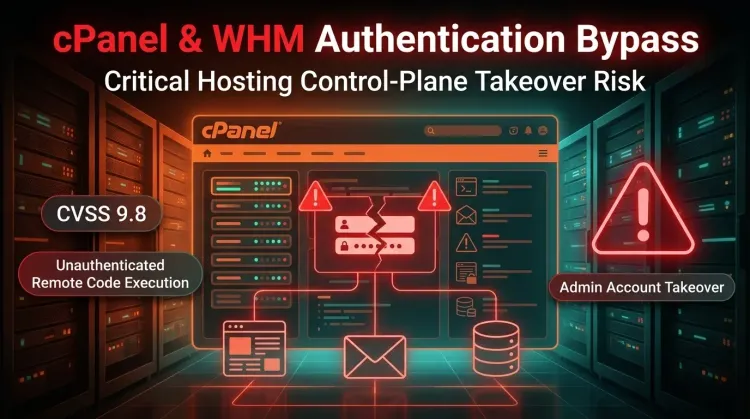
CVE-2026-41940 is a critical authentication bypass in cPanel and WHM, and the detail that matters most is where it lives. This is not a niche admin feature. It sits in one of the most widely exposed hosting management planes on the internet.
That changes the defender story. A pre-auth bug in cPanel is not just another login flaw. It is a potential shortcut into the control plane that governs websites, email, user accounts, databases, and server-level administration.
What the issue changes for defenders
cPanel's public changelog for version 136.0.5 describes the fix as CPANEL-52908: Fix an issue with session loading and saving. Rapid7 and watchTowr later tied that fix to CVE-2026-41940, a critical authentication bypass that can grant unauthenticated attackers administrative access.
According to Rapid7's analysis, the bug affects supported cPanel and WHM release trains before the emergency fixed versions and also impacts WP Squared. watchTowr's technical write-up says the issue stems from a CRLF injection path in the login and session handling flow, allowing attacker-controlled data to be written into a session file and then reloaded with elevated properties.
In plain terms, an attacker does not need a stolen password if they can manipulate the login flow into minting a trusted administrative session for them.
Why this is bigger than a normal auth bypass headline
A lot of critical web bugs stay scoped to one application. cPanel and WHM do not.
They are the management layer for hosting estates. Once that layer falls, the blast radius can jump quickly across many dependent assets:
- hosted websites can be modified or backdoored
- mailboxes and webmail can be abused for phishing or surveillance
- account settings and administrative users can be changed
- server configuration and persistence mechanisms can be altered
- downstream customer environments can inherit the compromise
That is why this is best understood as a control-plane problem, not just a login bug.
Rapid7 notes that exposed instances are vulnerable by default, and its analysis highlights the internet-scale footprint involved. BleepingComputer also reported emergency vendor fixes and pointed out that major hosting providers reacted fast enough to temporarily block management ports while patching.
When defenders see providers willing to cut off cPanel and WHM access across customer fleets, that is a useful severity signal by itself.
What provider reactions tell us
Namecheap said it temporarily blocked ports 2083 and 2087 while waiting for the patch rollout. KnownHost reported network-wide protections for cPanel and WHM login ports, later extending restrictions to related webmail and webdisk access before reopening services after patch deployment.
That kind of operational response matters because it shows how little confidence providers had in simply leaving exposed panels online during the gap between disclosure and remediation.
It also reinforces the practical risk: these interfaces are not internal-only for many organizations. They are directly reachable management services that attackers can scan and target at scale.
Where internal linking matters in this story
For defenders, CVE-2026-41940 is a reminder that exposed admin surfaces are really an access control problem wrapped around a software defect. If attackers can manufacture a session that the platform trusts, they skip the normal identity checks entirely.
It is also an incident response problem, not just a patching problem. Once a vulnerable internet-facing panel may have been exposed during the public exploitation window, teams should investigate what could have been changed after access was gained.
And the stopgap steps some providers took underline the continuing value of layered controls such as host exposure reduction, firewall policy, and segmentation around privileged management services.
What teams should do now
1. Patch to the emergency fixed versions immediately
The fixed versions called out by vendor and downstream reporting are:
- 11.110.0.97
- 11.118.0.63
- 11.126.0.54
- 11.132.0.29
- 11.134.0.20
- 11.136.0.5
- WP Squared 11.136.1.7
If a server is on an unsupported release, the problem is worse, not better. Those systems need an upgrade path, not just monitoring.
2. Review exposure, not just version numbers
Inventory which cPanel, WHM, webmail, and related management endpoints are reachable from the public internet. If those services do not need global exposure, reduce it now.
3. Check for signs of unauthorized session creation or admin activity
Because public analysis points to abuse of the login and session flow, defenders should review authentication logs, suspicious session behavior, unexpected administrator actions, account changes, and new persistence artifacts on affected hosts.
4. Validate the hosted estate behind the panel
A panel compromise can be only the first step. Check websites, mail settings, scheduled tasks, file integrity, account creation events, and any high-value hosted applications for signs of follow-on abuse.
5. Treat emergency port blocks as a bridge, not the finish line
Temporary filtering can buy time, but the durable fix is patching and reducing unnecessary exposure. If you had to use emergency access restrictions, remove them only after confirming upgrade success and validating the environment.
Strategic takeaway
CVE-2026-41940 matters because it turns one bug in one product into a possible takeover path for a large slice of a hosting environment.
When the vulnerable component is the management plane, the real question is not just whether login can be bypassed. It is what that trusted layer can reach once an attacker steps through it.
That is why defenders should rank exposed hosting control panels alongside other privileged internet-facing infrastructure. Attackers clearly do.
References
- cPanel 136 change log
- Rapid7: CVE-2026-41940 cPanel & WHM Authentication Bypass
- watchTowr Labs technical analysis and PoC
- BleepingComputer: cPanel, WHM emergency update fixes critical auth bypass bug
- Namecheap status update on temporary blocks during patching
- KnownHost incident thread on network-wide port blocking and patch rollout
FAQ
It is a critical cPanel and WHM authentication bypass in the login flow that can let unauthenticated remote attackers gain unauthorized access to affected systems.
Because cPanel and WHM often manage websites, mail, accounts, databases, and server administration for many hosted assets from one place.
The emergency fixed versions include 11.110.0.97, 11.118.0.63, 11.126.0.54, 11.132.0.29, 11.134.0.20, 11.136.0.5, and WP Squared 11.136.1.7.
Investigate logs and sessions, review admin actions and persistence, validate hosted assets behind the panel, and reduce ongoing public exposure where possible.
How to cite
Lucas Oliveira. CVE-2026-41940 turns exposed cPanel and WHM servers into control-plane takeover targets. 17 Aug 2026. Invaders Cybersecurity. https://invaders.ie/resources/blog/threat-hunting-and-intel/cve-2026-41940-cpanel-whm-control-plane-takeover.
Subscribe via RSS.
Written by
Lucas Oliveira
Research
A DevOps engineer and cybersecurity enthusiast with a passion for uncovering the latest in zero-day exploits, automation, and emerging tech. I write to share real-world insights from the trenches of IT and security, aiming to make complex topics more accessible and actionable. Whether I’m building tools, tracking threat actors, or experimenting with AI workflows, I’m always exploring new ways to stay one step ahead in today’s fast-moving digital landscape.
Hot TopicsLast 7 days
Categories
Stay Updated
Get the latest cybersecurity insights delivered to your inbox.