CISA's New KEV Additions Put Edge and AI Control Planes on a Short Patch Clock

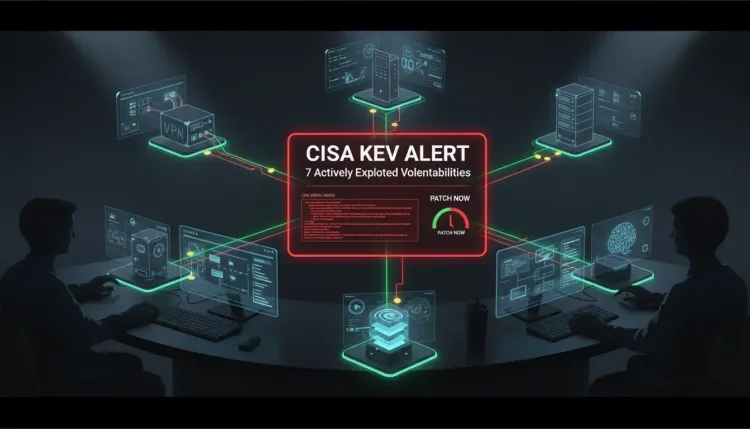
CISA's New KEV Additions Put Edge and AI Control Planes on a Short Patch Clock
CISA's latest Known Exploited Vulnerabilities update is not just another list of CVEs to route into the patch queue. The September 2 catalog release added seven actively exploited flaws across SonicWall SMA 1000 appliances, Sangoma Switchvox, JFrog Artifactory, Kestra OSS, Starlette, and LiteLLM. Several carry September 5 remediation deadlines for U.S. federal civilian agencies, which is an unusually compressed window for teams that also need to check compromise, rotate secrets, and validate internet exposure.
The common thread is control-plane risk. These are systems that sit near authentication, remote access, automation, artifact delivery, application routing, or AI tooling. When attackers land there, they may not need to immediately deploy noisy payloads. They can mint tokens, start authenticated sessions, run workflows, probe secrets, or bridge into internal systems.
That makes this a high-priority vulnerability management story, but it should not be treated as patching alone. Defenders need to identify exposed instances, apply vendor fixes, review logs for exploitation paths, and assume that some credentials or tokens may already have been tested.
What CISA added
CISA's catalog version 2026.09.02 lists seven new entries with evidence of active exploitation:
CVE-2026-83548, a SonicWall SMA 1000 pre-authentication SSRF issue.CVE-2026-83549, a SonicWall SMA 1000 post-authentication command injection issue.CVE-2026-9586, an unauthenticated SQL injection issue in Sangoma Switchvox that can lead to remote code execution.CVE-2026-82329, an improper authentication flaw in JFrog Artifactory that can allow unauthenticated administrative access under default configuration.CVE-2026-49869, a Kestra OSS command injection issue that can let unauthenticated attackers create and execute arbitrary workflows.CVE-2026-48710, a Starlette HTTP request/response smuggling issue with authentication bypass implications in URL-dependent access controls.CVE-2026-59822, a LiteLLM MCP Streamable HTTP endpoint authentication bypass that can let an unauthenticated attacker establish an authenticated MCP session using a fabricated bearer token.
CISA marked forensic triage as required for several of the most urgent entries, including SonicWall, Sangoma, JFrog, and Kestra. That is the part defenders should not miss. The catalog is saying, in effect: do not only update the affected asset; look for traces that the asset was already used as an access point.
SonicWall SMA 1000: an edge device attack chain
SonicWall says its SMA 1000 Series 12.4.3 and 12.5.0 firmware is affected by two actively exploited vulnerabilities. The first is a critical pre-authentication SSRF issue in the Appliance Work Place interface. The second is a high-severity command injection issue in the Appliance Management Console that can lead to remote code execution for an authenticated administrator.
The operational concern is chaining. SonicWall and public reporting both indicate attackers may combine the two issues to move from unauthenticated access to command execution on a remote access appliance. That puts these devices in the same practical risk class as other exploited VPN and secure access products: they are exposed by design, trusted by administrators, and often connected to sensitive internal paths.
Teams running SMA 1000 should upgrade to fixed platform hotfixes, review SonicWall indicators, and treat suspicious findings as a credential event. SonicWall recommends changing user and administrator passwords and resetting TOTP if indicators of compromise are present. For edge devices, that kind of reset should include adjacent authentication telemetry, not just the appliance itself.
Sangoma Switchvox: VoIP as an RCE surface
Sangoma Switchvox is another reminder that enterprise communications platforms are not secondary infrastructure from an attacker perspective. CISA describes CVE-2026-9586 as an unauthenticated SQL injection flaw that allows crafted requests against the backend PostgreSQL database, with database operations and remote code execution in scope.
BleepingComputer reports active exploitation, including reverse shell deployment, and cites researchers warning that internet-exposed systems are likely to be targeted quickly. That shifts the response from ordinary maintenance to incident review: identify public Switchvox systems, apply the fixed release, inspect for reverse shell behavior, review new or modified database entries, and rotate credentials tied to the platform.
Voice platforms can hold call routing details, account data, recordings, integrations, and administrative credentials. If an attacker reaches execution, the platform can become a pivot point into a broader access control problem.
JFrog Artifactory: repository trust becomes identity risk
The JFrog Artifactory issue is especially serious because artifact repositories are trust hubs. CISA says CVE-2026-82329 can allow unauthenticated administrative privileges under default configuration. BleepingComputer and The Hacker News report exploitation attempts focused on forging or creating administrative tokens.
That is not only a product vulnerability. It is a supply and deployment risk. Artifactory often sits between source code, build systems, packages, containers, and production releases. A forged admin token can expose private packages, alter artifacts, change repository configuration, or create a path toward software delivery compromise.
Defenders should patch, verify the Artifactory version and configuration state, audit recently created tokens and administrators, review repository changes, and consider whether any downstream build credentials or signing material could have been exposed. This is where threat intelligence should meet internal telemetry: public indicators help, but token and package activity inside the environment will matter more.
Kestra, Starlette, and LiteLLM: automation and AI tooling are now part of the exposed attack surface
The remaining KEV entries show why defenders need to inventory modern automation and AI infrastructure with the same seriousness as classic VPNs and web apps.
Kestra OSS is an orchestration platform. CISA says CVE-2026-49869 can let an unauthenticated remote attacker create and execute arbitrary workflows. In practice, workflow execution can become command execution, credential access, data movement, or cloud API abuse, depending on how the platform is integrated.
Starlette, a Python web framework used by many services, was added for an HTTP request/response smuggling issue. CISA notes authentication bypass risk when authentication depends on reconstructed URL paths. That matters because path confusion bugs rarely stay isolated to one endpoint; they can undermine assumptions in proxies, middleware, routing layers, and policy checks.
LiteLLM's CVE-2026-59822 is particularly relevant for organizations adding AI gateways and MCP tooling. The GitHub advisory says the MCP Streamable HTTP endpoint could allow an unauthenticated attacker to establish an authenticated session using an arbitrary bearer token. If an AI gateway has access to tools, internal APIs, secrets, or model-connected automation, bypassing its authentication can create a new control-plane foothold.
These entries are a useful warning: AI platform security is no longer an abstract governance concern. MCP endpoints, model gateways, workflow engines, and developer automation need exposure management, authentication testing, logging, and emergency patch paths.
Defender priorities
Start with internet exposure. Search asset inventories, external attack surface tools, cloud load balancers, reverse proxies, VPN portals, and DNS records for the affected products. The highest-risk cases are publicly reachable SonicWall SMA 1000, Sangoma Switchvox, JFrog Artifactory, Kestra OSS, Starlette services using vulnerable dependency versions, and LiteLLM deployments exposing MCP endpoints.
Then patch according to vendor guidance. For the entries with September 5 KEV due dates, treat the timeline as immediate. For the September 16 items, do not wait simply because the deadline is longer; Starlette and LiteLLM can sit inside many applications and may require dependency rebuilds, redeployments, or owner coordination.
Review for exploitation after patching. Look for unexpected administrator tokens, new users, suspicious workflow creation, reverse shell patterns, unusual outbound connections, URL/path anomalies, and failed authentication oddities that suddenly become successful sessions. Where forensic triage is required or recommended, preserve logs before rebuilding affected systems.
Rotate secrets where the platform could expose them. That includes appliance administrator passwords, TOTP seeds after confirmed SonicWall compromise, Artifactory access tokens, repository credentials, CI/CD secrets, workflow runner credentials, database credentials, and AI gateway keys. If malware or miner deployment is observed, expand the investigation to persistence, outbound command-and-control, and cryptojacking indicators.
Finally, close the inventory gap. This KEV batch spans legacy edge access, VoIP, developer infrastructure, application frameworks, orchestration, and AI gateway tooling. The organizations that respond fastest will be the ones that can answer a simple question quickly: where are these control planes running, who owns them, and what credentials can they reach?
The bigger picture
The security lesson is bigger than any single CVE. Attackers are converging on systems that broker trust: remote access appliances, communication platforms, artifact repositories, automation engines, web routing layers, and MCP-enabled AI gateways. These systems often sit outside the standard endpoint view but inside the path to meaningful access.
CISA's KEV update should trigger a short, disciplined response loop: inventory, patch, triage, rotate, and monitor. Teams that stop at version upgrades may miss the more important question: whether exploitation already converted a product flaw into a durable foothold.
References
- CISA Catalog of Known Exploited Vulnerabilities
- CISA Adds Seven Exploited Flaws as Attackers Deploy Reverse Shells and Crypto Miners
- SMA 1000 Series affected by Multiple Vulnerabilities
- Hackers exploit Sangoma Switchvox flaw to deploy reverse shells
- Hackers exploit critical JFrog Artifactory flaw to forge admin tokens
- MCP Authentication Bypass via OAuth2 Passthrough Fallback
FAQ
CISA's latest Known Exploited Vulnerabilities update is not just another list of CVEs to route into the patch queue. The September 2 catalog release added seven actively exploited flaws across SonicWall SMA 1000 appliances, Sangoma Switchvox, JFrog Artifactory, Kestra OSS, Starlette, and LiteLLM. Several carry September 5 remediation deadlines for U.S.