ServiceNow Critical Flaws Expose Enterprise Workflows

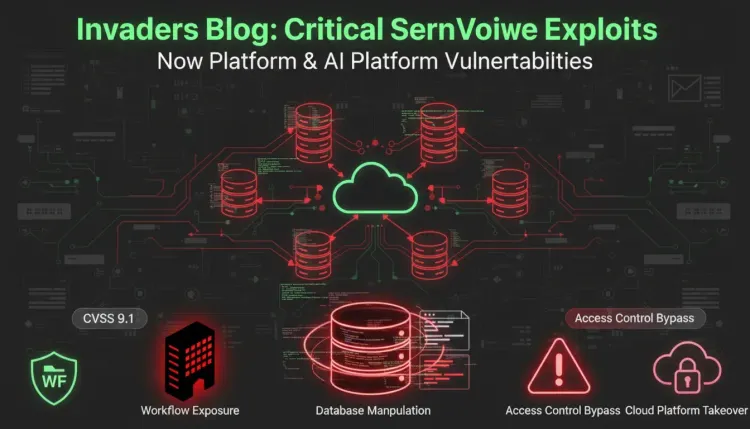
ServiceNow Critical Flaws Expose Enterprise Workflows | 2026
ServiceNow has patched a cluster of critical flaws in the Now Platform and AI Platform, including three vulnerabilities rated CVSS 10.0. The issues are tracked as CVE-2026-18885, CVE-2026-18886 and CVE-2026-74820, with a fourth high-severity sandbox escape tracked as CVE-2026-6876.
This is a high-priority enterprise remediation story because ServiceNow is rarely just another SaaS platform. In many organizations it sits at the center of HR workflows, IT service management, approvals, vendor processes, security operations and automation. A critical vulnerability in that layer can put sensitive business data and workflow integrity at risk.
What Was Patched
Public reporting and sector advisories describe four issues addressed by ServiceNow:
- CVE-2026-18885: a critical code injection vulnerability that could allow arbitrary code execution under specific conditions.
- CVE-2026-18886: a critical improper access control issue that could allow unauthorized data creation, modification or privilege escalation.
- CVE-2026-74820: a critical SQL injection issue that could allow arbitrary SQL statements against underlying ServiceNow data.
- CVE-2026-6876: a high-severity sandbox escape affecting the platform execution boundary.
The most important operational detail is that the critical issues are described as low-complexity and high-impact. Even when exploitation has not been publicly confirmed, vulnerabilities in a workflow platform with privileged business context should move quickly through emergency change review.
Why It Matters
ServiceNow often becomes a system of record for access requests, incidents, employee data, finance approvals, vendor onboarding, configuration items and internal automation. If attackers can execute code, modify records, escalate privileges or query backend data beyond intended boundaries, they may be able to quietly alter decisions that security and operations teams trust.
The AI Platform angle also raises the stakes. As organizations connect automation, ticketing, security playbooks and AI-assisted workflows, the blast radius of a platform flaw expands beyond one application screen. Compromise can become a path into process manipulation: fake approvals, tampered incident records, unauthorized access workflows or data extraction through trusted business logic.
This is not only a patching problem. It is a trust problem around workflow state.
Who Should Prioritize It
Teams should prioritize review if they operate ServiceNow Now Platform or AI Platform instances that support:
- IT service management and privileged access request workflows.
- Security operations, incident response or vulnerability response modules.
- HR, employee relations or finance approval workflows.
- Integrations with identity providers, endpoint tools, CMDB data or automation platforms.
- Custom scripts, scoped applications or AI Platform capabilities.
The closer ServiceNow is to identity, approvals and incident response, the faster these updates should move.
Immediate Response
First, confirm the ServiceNow security advisory applies to your instance family and patch level. Apply the latest vendor updates or hotfixes through the normal ServiceNow maintenance path, then verify the instance version reflects the fixed release.
Second, review administrative activity and sensitive workflow changes around the advisory window. Look for unusual role assignments, modified approval flows, unexpected script changes, abnormal database access patterns and recently changed integrations.
Third, validate compensating controls. Restrict administrative access, enforce MFA for privileged users, review API integrations and confirm service accounts are scoped to the least privilege required.
Fourth, involve workflow owners. Security teams can validate technical exposure, but process owners know what suspicious approval, HR or finance changes look like. Treat record integrity as part of the remediation.
Detection and Investigation Ideas
Focus on events that suggest manipulation rather than only obvious intrusion:
- New or modified admin roles without a clear change ticket.
- Changes to business rules, scripts, flows, integrations or scoped applications.
- Unusual queries or bulk reads against sensitive tables.
- Workflow approvals created or completed outside expected patterns.
- API activity from unfamiliar integrations or service accounts.
- Failed sandbox or script execution events clustered around untrusted input paths.
Where logs are available, preserve them before normal retention clears high-value evidence. If the instance supports security operations or access workflows, treat anomalous changes as potentially material even when endpoint alerts are quiet.
Strategic Takeaway
Workflow platforms concentrate authority. A flaw in that layer can undermine the processes defenders use to approve access, track incidents and coordinate response.
The practical response is patch fast, but investigate thoughtfully. Confirm the fix, review sensitive workflow changes, and make sure trusted business automation has not been used as an attacker-controlled decision engine.
References
- https://support.servicenow.com/kb?id=kb_article_view&sysparm_article=KB3137947
- https://digital.nhs.uk/cyber-alerts/2026/cc-4839
- https://www.securityweek.com/servicenow-patches-3-critical-code-injection-vulnerabilities/
- https://www.csoonline.com/article/4215430/servicenow-patches-three-maximum-severity-flaws-that-could-put-enterprise-data-at-risk.html
FAQ
The same-day public sources reviewed for this post described critical patched flaws but did not confirm active exploitation. That means teams should prioritize remediation based on impact and exposure, while checking vendor channels for any change in exploitation status.
Cloud delivery does not remove customer responsibility for configuration, integrations, roles, custom scripts and workflow review. Once a vendor patch is available, customers still need to confirm their instance status and inspect sensitive workflow activity.
Review admin roles, business rules, flows, scripts, API integrations and sensitive record changes. The goal is to confirm that workflow state and privileged automation were not altered before remediation.
How to cite
Lucas Oliveira. ServiceNow Critical Flaws Expose Enterprise Workflows. 2 Sept 2026. Invaders Cybersecurity. https://invaders.ie/resources/blog/vulnerability/servicenow-critical-flaws-enterprise-workflows-2026.
Subscribe via RSS.
Written by
Lucas Oliveira
Research
A DevOps engineer and cybersecurity enthusiast with a passion for uncovering the latest in zero-day exploits, automation, and emerging tech. I write to share real-world insights from the trenches of IT and security, aiming to make complex topics more accessible and actionable. Whether I’m building tools, tracking threat actors, or experimenting with AI workflows, I’m always exploring new ways to stay one step ahead in today’s fast-moving digital landscape.
Hot TopicsLast 7 days
Categories
Stay Updated
Get the latest cybersecurity insights delivered to your inbox.