ShinyHunters Breach of Clop Leak Site Shows Ransomware Infrastructure Is a Target Too

ShinyHunters Breach of Clop Leak Site Shows Ransomware Infrastructure Is a Target Too
Ransomware leak sites are usually discussed as pressure tools against victims. This weekend, one of those pressure tools became the target.
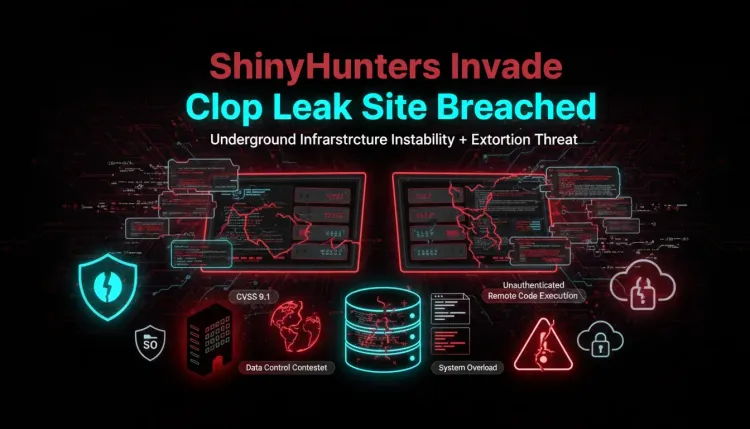
According to BleepingComputer, the ShinyHunters extortion group compromised the Clop ransomware operation's Tor-hosted leak site, uploaded a message, and later defaced the site. ShinyHunters also claimed it stole server data and private keys for Clop's onion service, although BleepingComputer said it independently confirmed the uploaded file and defacement but had not independently verified every theft claim.
Cybernews also reported the incident, citing the same core claims: defacement of Clop's site, alleged theft of source code, logs, plugins, and onion keys, and a plan by ShinyHunters to give Clop 72 hours to respond to an extortion message.
The irony is obvious. But the operational lesson is more useful: cybercrime groups depend on infrastructure too. They run web apps, content management systems, leak portals, private services, keys, logs, and admin workflows. Those systems can be misconfigured, vulnerable, or poorly segmented just like any enterprise environment.
What Happened
The initial compromise reportedly began when ShinyHunters exploited what it described as an unauthenticated file upload issue in the Grav CMS instance behind Clop's leak site. The group allegedly used that access to upload a message to Clop's Tor service. Several hours later, the site was replaced with a defacement that pointed visitors toward ShinyHunters' own leak infrastructure.
ShinyHunters then told BleepingComputer it had gained deeper access and was reviewing stolen server data. The group claimed the stolen material included source code, Grav CMS plugins, system logs, and the private keys needed to control Clop's onion address. If the onion-key claim is accurate, that would be especially damaging because control of those keys could let another operator host content at the same Tor address.
That part remains an allegation. The confirmed facts are narrower: the Clop leak site was reachable with attacker-uploaded content, and it was later defaced. The broader claims should be treated as unverified until more evidence appears.
Even with that caution, the incident is significant. Leak sites are public-facing infrastructure for ransomware groups. They are used to shame victims, publish stolen files, negotiate pressure, and build credibility with affiliates and victims. A public compromise damages all of that.
Why Criminal Infrastructure Matters To Defenders
At first glance, one extortion group attacking another may look like underground drama with little relevance to defenders. That is too narrow.
Cybercrime infrastructure often contains evidence. Logs can reveal operators, affiliate activity, victim access patterns, upload workflows, administration habits, and mistakes. Source code and plugins can show how leak sites verify victims, stage stolen data, manage countdowns, and automate pressure campaigns. Private keys can affect trust in onion services and the continuity of criminal brands.
When rival groups expose each other's systems, defenders may get a rare glimpse into tradecraft. The same event can also create confusion. If a leak site changes hands or becomes unreliable, victims may face impersonation attempts, duplicate extortion demands, or altered publication timelines. Researchers tracking victims and data exposure may need to verify whether the site is still controlled by the original group.
This is where threat intelligence teams should resist the urge to treat leak-site content as a stable source of truth. A defaced or disputed criminal service should be tagged as contested infrastructure. Claims published there may not carry the same confidence they did before compromise.
The Extortion Loop Turns Inward
The reported motivation is a feud between ShinyHunters and Clop. ShinyHunters says it is retaliation for threats made by a Clop representative after disputes connected to previous data-theft activity. The group also told reporters it planned to extort Clop.
That detail matters because it shows the extortion economy turning inward. Groups that monetize stolen data are now applying the same playbook against each other: compromise infrastructure, claim possession of sensitive material, threaten publication, and demand contact under a deadline.
For defenders, the main takeaway is not that criminals are suddenly self-policing. It is that the ecosystem is volatile. Affiliates, initial access brokers, data brokers, and leak-site operators do not share durable loyalty. When relationships break, infrastructure and stolen data can be re-used, leaked, sold again, or weaponized in new campaigns.
That volatility can affect victims. An organization hit by one group may later see its data referenced by another group, a copycat site, or a rival claiming to have obtained the same archive. Incident teams should preserve evidence, track claim provenance, and avoid assuming that a single negotiation channel represents all parties holding stolen data.
What Security Teams Should Do With This Signal
There is no enterprise patch for "criminal groups feud on Tor." But there are defensive actions that make sense.
First, treat ransomware leak-site intelligence as useful but unstable. If your organization, supplier, or sector appears on a leak site, capture evidence with timestamps, preserve screenshots and URLs, and validate through multiple sources before making external claims.
Second, review monitoring for duplicate extortion attempts. If one intrusion leads to multiple criminals contacting the victim, the incident may involve shared data, reseller activity, or a dispute between actors. That can change legal, communications, and incident response planning.
Third, watch for infrastructure indicators tied to the feud only where they are relevant. Defenders should not blindly block everything associated with reporting on the incident, but they should use confirmed domains, onion references, hashes, or contact handles in a controlled intelligence workflow.
Fourth, remember that public-facing CMS weaknesses are still a common entry point. The alleged Grav CMS upload path has not been independently proven in full, but the pattern is familiar: exposed web app, file upload, defacement, deeper access claim. The same class of vulnerability remains a routine path into legitimate organizations.
Finally, keep the focus on resilience. Ransomware remains a business-impact problem, not just a malware problem. Segmented networks, tested backups, strong identity controls, hardened external services, and clear communication playbooks still matter more than any one underground feud.
A Useful Crack In The Myth
Ransomware groups try to project inevitability. Leak sites are part of that theater: countdown timers, victim lists, polished claims, and the suggestion that the criminals are in complete control.
The Clop defacement undercuts that image. These operations are made of ordinary infrastructure, ordinary software, ordinary keys, and ordinary mistakes. They can be disrupted. They can lose control of their own systems. Their claims can be contested.
That does not make them harmless. Clop and ShinyHunters remain serious cybercrime actors with histories of large-scale data-theft and extortion activity. But defenders should notice the crack in the performance. Criminal infrastructure is fragile, competitive, and dependent on the same operational security discipline that attackers exploit when their victims lack it.
For security teams, the signal is simple: keep tracking the ecosystem, but do not treat ransomware leak sites as neutral bulletin boards. They are adversary-controlled infrastructure, and sometimes even adversaries lose control.
References
FAQ
Ransomware leak sites are usually discussed as pressure tools against victims. This weekend, one of those pressure tools became the target.
At first glance, one extortion group attacking another may look like underground drama with little relevance to defenders. That is too narrow.