Cisco Expressway CVE-2026-76466: Patch the Clustered Gateway Before Attackers Pivot

Cisco Expressway CVE-2026-76466: Patch the Clustered Gateway Before Attackers Pivot
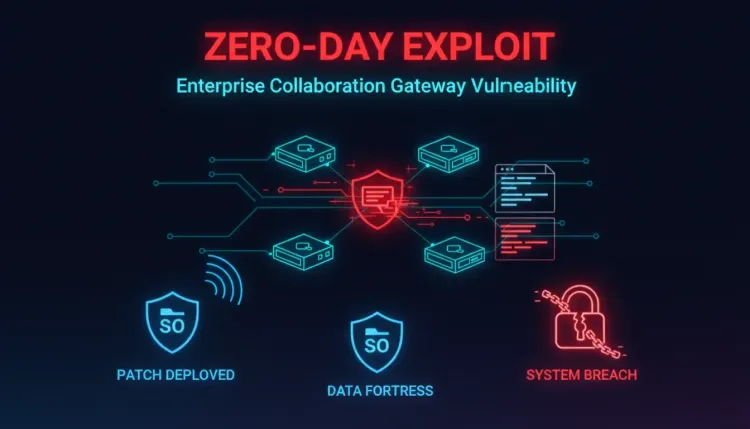
Cisco Expressway administrators have a hard remediation task: CVE-2026-76466 is a critical remote-code-execution flaw in clustered Expressway-C and Expressway-E deployments, and CISA added it to the Known Exploited Vulnerabilities catalog on November 20.
What defenders need to know
The vulnerability carries a CVSS score of 9.8. An unauthenticated attacker with network access to an affected device can abuse the database service to invoke specific remote procedure calls and execute operating-system commands as root. Cisco attributes the issue to persistent cookies and insufficient validation of cluster client certificates when TLS Verify Mode is enabled.
The exposure is narrower than “every Expressway system”: Cisco says the affected products are virtual or appliance versions of Expressway-C and Expressway-E configured in a cluster. X15.5.3 and earlier releases are vulnerable; X15.5.20 contains the fix. Administrators on X14 or earlier must migrate to a fixed release. Cisco lists no workaround that fixes the vulnerability.
Exploitation changes the priority
Cisco's original advisory said its PSIRT was unaware of malicious use. That position is now overtaken by operational reporting. Security researchers documented attackers compromising two internet-exposed Expressway nodes at a Russian organization shortly after public proof-of-concept code appeared. The attackers then pivoted to two cluster nodes on the internal network and prepared tooling to scan SMB, SQL Server, WinRM and GitLab resources.
That sequence turns an edge gateway into a potential attack surface and lateral movement launch point. Root access on the appliance is not the end of the incident; it is the point at which defenders need to investigate connected collaboration systems, credentials and internal trust paths.
Response priorities
- Inventory clustered deployments. Identify every Expressway-C and Expressway-E virtual or appliance node, its release, cluster membership and internet exposure.
- Upgrade to fixed software. Move X15 deployments to X15.5.20 or later and migrate X14 and earlier releases to a fixed release. Treat firewall restrictions as temporary risk reduction, not a patch substitute.
- Constrain the database service. Until upgrades are complete, restrict TCP ports 4371–4372 to trusted cluster-node addresses where that is operationally possible.
- Review Erlang and system logs. Look for unexpected database-service connections, RPC activity, new files, command execution and connections from unfamiliar cluster peers.
- Hunt beyond the gateway. Review SMB, WinRM, SQL Server and GitLab access from Expressway nodes, then preserve relevant logs and credentials for an incident response investigation.
- Rotate exposed trust material. If unauthorized root access or suspicious cluster activity is confirmed, rotate credentials and tokens connected to the collaboration environment and validate privileged accounts.
The broader lesson
Remote-access and collaboration gateways often sit at the boundary between the internet and high-value internal services. A vulnerability that requires a clustered configuration can still be strategically important when that configuration is the normal enterprise deployment model.
The practical decision is straightforward: find the clustered nodes, upgrade them, restrict the database ports during the change window, and investigate before assuming the patch closes the incident. A fixed release removes the exploit path; it does not answer whether an attacker already used it to reach the network behind the gateway.
Sources
- Cisco Security Advisory: Cisco Expressway Series Remote Code Execution Vulnerability
- SecurityWeek: Hackers Exploit Cisco Expressway Vulnerability Soon After PoC Release
- Canadian Centre for Cyber Security: Cisco security advisory AV26-1073
References
FAQ
Cisco Expressway administrators have a hard remediation task: CVE-2026-76466 is a critical remote-code-execution flaw in clustered Expressway-C and Expressway-E deployments, and CISA added it to the Known Exploited Vulnerabilities catalog on November 20.
Inventory clustered deployments. Identify every Expressway-C and Expressway-E virtual or appliance node, its release, cluster membership and internet exposure. Upgrade to fixed software. Move X15 deployments to X15.5.20 or later and migrate X14 and earlier releases to a fixed release. Treat firewall restrictions as temporary risk reduction, not a patch substitute. Constrain the database service.