NIKKE PC Launcher Compromise Turns a Trusted Update Path into a Malware Delivery Channel

NIKKE PC Launcher Compromise Turns a Trusted Update Path into a Malware Delivery Channel
The Windows PC launcher for Goddess of Victory: NIKKE was tampered with by a third party, putting players at risk of remote access, credential theft, and cryptocurrency theft. The incident is a useful reminder that a signed-looking game client or vendor-controlled CDN is still part of the software supply chain, not a trust exemption.
What happened
Level Infinite and Shift Up said on November 4 that files in the NIKKE Windows PC launcher's script set had been altered. Their follow-up notice says an open-source domain used by certain game services was hijacked on September 27, after which launcher scripts were partially tampered with. The publisher says distribution of malicious programs began on October 30 and that it detected anomalies on November 4.
The publisher replaced three abnormal files during its first response, refreshed the CDN cache for the remaining file, and added a security-check feature to the PC client. Anyone who launched the Windows launcher after September 27 at 15:41 UTC+9 is advised to run the check. The mobile versions are outside this specific launcher path.
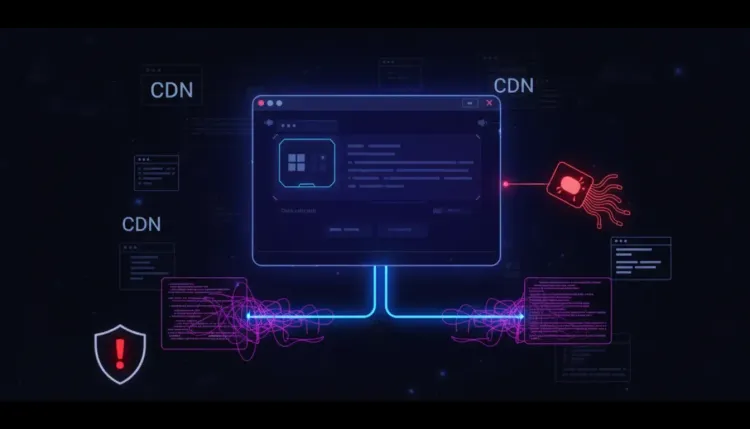
Independent analysis reported by BleepingComputer found that four JavaScript files served from the publisher's official CDN were modified to load additional code from attacker-controlled domains. The loader used the launcher's native functionality to retrieve a LuaJIT payload associated with a remote-access agent called K2F.
Why the impact is bigger than a game account
The reported payload could execute commands, browse and download local files, capture screenshots, collect browser and NIKKE credentials, and install a DLL that could remain active after the launcher closed. Analysis also found code targeting cryptocurrency wallet extensions, although it is not yet clear whether the wallet-stealing component was deployed broadly or whether funds were stolen.
That distinction matters. The confirmed fact is that a trusted launcher path was used to deliver malicious code. The full victim count and successful theft scope remain under investigation. Defenders should not turn technical capability into an unsupported claim about every player, but they should treat a machine that ran the affected launcher as potentially exposed until it is checked.
This is the defining feature of a supply-chain attack: the victim does not need to download an obviously suspicious file. The attacker abuses a dependency, update mechanism, CDN, build process, or trusted service that users already expect to contact. Familiarity becomes the delivery advantage.
The response window is part of the incident
The publisher's timeline shows why CDN and third-party dependency monitoring matter. The domain hijack and script tampering occurred weeks before the anomaly was detected. A launcher can be clean at installation and malicious later, or it can pull a changed script while its executable and brand still look legitimate.
For software publishers, integrity checks should cover the complete delivery path: source files, build outputs, external domains, CDN objects, cache state, and the permissions exposed to launcher scripts. External resources should be pinned or verified cryptographically where possible. A launcher should also operate with least privilege so that a compromised script cannot automatically become a host-wide foothold.
For enterprise defenders, the lesson is broader than gaming. Developer tools, browser extensions, remote-support clients, collaboration software, and “small” desktop utilities can all become initial access paths when their update or content-delivery chain is compromised.
What affected users and defenders should do
- Do not launch an old NIKKE Windows client or assume that reinstalling from the same cached files is sufficient. Use the publisher's current security-check guidance and updated client.
- If the launcher was run during the affected window, isolate the host from sensitive networks while checking it. Preserve relevant logs before cleanup where an investigation may be required.
- Look for the reported
k2f_chan registeredentry inLauncher/intl_service/debug.log, but do not treat one indicator as a complete verdict. Absence of that string does not prove that no other component ran. - From a clean device, rotate passwords used on the affected machine and revoke API keys, access tokens, browser sessions, and wallet credentials that may have been present. Prioritize privileged, business, cloud, and financial accounts.
- Inspect browser extensions, startup entries, scheduled tasks, recently created DLLs, unusual outbound connections, and unexpected remote-control activity. Run current endpoint protection and consider a full reimage when compromise is confirmed or the host held high-value secrets.
- Organisations should search DNS, proxy, EDR, and firewall telemetry for the reported attacker-controlled domains and review other software that loaded the same external resources.
The right response is proportionate but not casual: verify the host, rotate what it could access, and investigate before returning it to sensitive work. A game launcher is not automatically a security boundary simply because it came from the official publisher.
The bigger takeaway
The NIKKE incident is a practical example of why software supply chain risk is about trust relationships, not only package managers. A hijacked domain, a modified CDN object, and a privileged launcher can turn a routine start-up into a malware execution chain.
Publishers need verifiable resource integrity, tighter permissions, and faster anomaly detection. Customers need inventory, telemetry, segmentation, and a tested process for rotating secrets after a trusted application is compromised. The question is not whether the software looked legitimate. It is whether the entire path from publisher to running process remained trustworthy.
References
FAQ
The Windows PC launcher for Goddess of Victory: NIKKE was tampered with by a third party, putting players at risk of remote access, credential theft, and cryptocurrency theft. The incident is a useful reminder that a signed-looking game client or vendor-controlled CDN is still part of the software supply chain, not a trust exemption.
The reported payload could execute commands, browse and download local files, capture screenshots, collect browser and NIKKE credentials, and install a DLL that could remain active after the launcher closed. Analysis also found code targeting cryptocurrency wallet extensions, although it is not yet clear whether the wallet-stealing component was deployed broadly or whether funds were stolen.
The publisher's timeline shows why CDN and third-party dependency monitoring matter. The domain hijack and script tampering occurred weeks before the anomaly was detected. A launcher can be clean at installation and malicious later, or it can pull a changed script while its executable and brand still look legitimate.