Dirty Frag Linux kernel zero-day gives local users a fast path to root

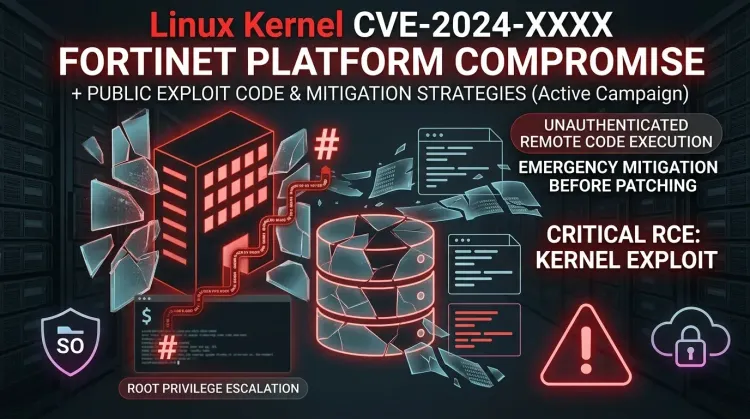
Dirty Frag Linux kernel zero-day gives local users a fast path to root
Dirty Frag deserves attention because it is not a theoretical Linux bug waiting for slow weaponization. Researcher Hyunwoo Kim disclosed a working local privilege escalation chain on May 7, public exploit code is already available, and distro maintainers were still racing to coordinate patches after the embargo broke.
That combination moves this straight into zero-day territory for defenders. If an untrusted user can land on a Linux host, whether through a shared shell, a CI runner, a container build environment, or another initial foothold, Dirty Frag can turn that access into root quickly.
What Dirty Frag actually is
Dirty Frag is a Linux kernel bug class that chains two page-cache write issues, one in the xfrm-ESP path and one in RxRPC, to modify protected files in memory and escalate privileges. According to Kim's public disclosure and technical write-up, the exploit can corrupt page-cache-backed data for files an unprivileged user can read but should not be able to modify, including targets such as /usr/bin/su.
That matters because the attack does not depend on a fragile race. Kim describes it as a deterministic logic bug with a high success rate. In practical terms, that lowers exploit friction and raises the risk for any environment where local shell access is not tightly controlled.
Why this issue is more urgent than a normal local bug
1. Public exploit code landed before coordinated patching
The responsible-disclosure process broke down before distributions had time to ship fixes broadly. That means defenders are dealing with a real exploit window, not just a future patch cycle.
2. It bypasses the comfort of the last mitigation story
Dirty Frag belongs to the same broad family as Dirty Pipe and Copy Fail, but it is not solved by simply carrying forward the earlier Copy Fail mitigation. Kim explicitly notes that systems can remain vulnerable even where the known algif_aead mitigation for Copy Fail was applied.
3. Multi-tenant Linux environments are the real pressure point
AlmaLinux's advisory is blunt on this: if you run multi-tenant hosts, CI runners, shared infrastructure, or other systems where untrusted users can gain a shell, this matters immediately. The risk is less about internet-scale remote exploitation and more about how fast a low-privilege foothold can become full-system compromise.
Affected systems and current patch reality
Reporting and vendor advisories indicate exposure across major Linux distributions, including Ubuntu, RHEL-family systems, Fedora, CentOS Stream, AlmaLinux, and openSUSE variants. At disclosure time, there was still no CVE assigned and no universal patch rollout across all affected distributions.
Some vendors moved quickly. AlmaLinux published patched kernels in testing channels ahead of upstream timing, and CloudLinux published immediate mitigation guidance while its patched kernels and livepatches were still in progress.
That split matters operationally. Defenders should assume patch availability will vary by distro, branch, and kernel stream for at least some period after disclosure.
Why the exploit path is operationally dangerous
The underlying technique corrupts kernel-managed page cache during in-place crypto operations on externally backed pages. You do not need to remember the implementation details to understand the risk. The attacker can turn read access plus local code execution into a write effect on security-sensitive files and then pivot into root execution.
Once that happens, the problem is no longer limited to the host itself. Root access can disable controls, harvest credentials, tamper with logs, weaken access control, and create a staging point for lateral movement.
What defenders should do right now
Patch where your vendor already has a fixed kernel
If your distro has released a patched kernel or testing build for urgent validation, prioritize it. Rebooting into the fixed kernel is the cleanest path out of exposure.
Apply the temporary mitigation where patching is not immediate
Both the researcher disclosure and downstream vendor guidance point to blacklisting the affected esp4, esp6, and rxrpc modules as the immediate containment move. This is a practical emergency step, but it is not transparent for every environment. Systems relying on kernel-side IPsec or RxRPC-related workloads need extra care before applying it.
Treat potentially exposed hosts as an incident response question
Because Dirty Frag can modify protected binaries in page cache, mitigation alone is not the full story on systems that may already have been targeted. AlmaLinux and CloudLinux both highlight the need to evict tainted page cache after mitigation. That is a strong signal that teams should think beyond patching and assess whether post-exploitation cleanup is required.
Prioritize monitoring on shared Linux estates
If you run developer jump boxes, academic clusters, CI builders, container build farms, or managed multi-user servers, review access policies and telemetry now. Strong endpoint detection and response on Linux and focused threat intelligence tracking around exploit reuse are worth the attention here.
Strategic takeaway
Dirty Frag is a sharp reminder that Linux local privilege escalation bugs still become enterprise-critical when three things line up: a deterministic exploit path, public code, and lagging patch coordination.
For many organizations, the right question is not "is this remotely exploitable?" but "where could an attacker or untrusted user realistically get a shell first?" On those systems, Dirty Frag should be handled as an urgent containment-and-hardening priority, not as a routine kernel maintenance item.
References
FAQ
Dirty Frag is a newly disclosed Linux kernel local privilege escalation chain that can let an unprivileged local user gain root by abusing page-cache writes in xfrm-ESP and RxRPC paths.
Public exploit details arrived before coordinated patch coverage was broadly available, and maintainers were still working through fixes when the disclosure became public.
Organizations running shared Linux systems, CI runners, multi-tenant environments, and any host where an attacker could realistically gain a low-privilege shell should prioritize it first.
Not always. Because the exploit can tamper with page-cache-backed binaries in memory, teams should consider containment, cache eviction, and host review alongside patching.